
1. Material Basics and Morphological Advantages
1.1 Crystal Structure and Chemical Composition
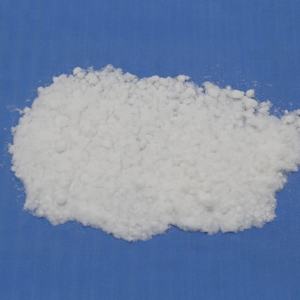
(Spherical alumina)
Spherical alumina, or round aluminum oxide (Al two O SIX), is a synthetically created ceramic product characterized by a well-defined globular morphology and a crystalline structure primarily in the alpha (α) phase.
Alpha-alumina, the most thermodynamically secure polymorph, includes a hexagonal close-packed setup of oxygen ions with light weight aluminum ions inhabiting two-thirds of the octahedral interstices, resulting in high lattice power and outstanding chemical inertness.
This phase displays outstanding thermal stability, maintaining stability up to 1800 ° C, and stands up to response with acids, antacid, and molten metals under a lot of industrial conditions.
Unlike uneven or angular alumina powders originated from bauxite calcination, round alumina is crafted with high-temperature processes such as plasma spheroidization or fire synthesis to achieve uniform roundness and smooth surface area appearance.
The makeover from angular precursor particles– frequently calcined bauxite or gibbsite– to dense, isotropic rounds eliminates sharp edges and internal porosity, improving packaging effectiveness and mechanical resilience.
High-purity grades (≥ 99.5% Al ₂ O FIVE) are important for electronic and semiconductor applications where ionic contamination have to be lessened.
1.2 Particle Geometry and Packaging Habits
The specifying feature of round alumina is its near-perfect sphericity, generally quantified by a sphericity index > 0.9, which substantially affects its flowability and packaging density in composite systems.
As opposed to angular bits that interlock and develop voids, round fragments roll previous each other with marginal rubbing, enabling high solids filling throughout solution of thermal interface products (TIMs), encapsulants, and potting compounds.
This geometric harmony permits maximum academic packing thickness exceeding 70 vol%, much surpassing the 50– 60 vol% normal of irregular fillers.
Higher filler filling directly converts to boosted thermal conductivity in polymer matrices, as the continual ceramic network provides efficient phonon transportation paths.
In addition, the smooth surface minimizes wear on handling devices and minimizes viscosity surge during mixing, enhancing processability and diffusion security.
The isotropic nature of spheres additionally protects against orientation-dependent anisotropy in thermal and mechanical buildings, guaranteeing regular performance in all directions.
2. Synthesis Methods and Quality Control
2.1 High-Temperature Spheroidization Strategies
The manufacturing of spherical alumina primarily relies upon thermal techniques that thaw angular alumina particles and permit surface area tension to improve them right into spheres.
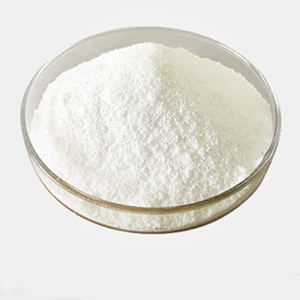
( Spherical alumina)
Plasma spheroidization is the most widely utilized commercial technique, where alumina powder is infused right into a high-temperature plasma fire (approximately 10,000 K), creating rapid melting and surface tension-driven densification right into perfect spheres.
The liquified droplets solidify quickly throughout trip, forming dense, non-porous bits with uniform size distribution when paired with specific category.
Alternate approaches include fire spheroidization utilizing oxy-fuel torches and microwave-assisted home heating, though these usually offer lower throughput or less control over particle size.
The beginning product’s purity and particle dimension circulation are crucial; submicron or micron-scale forerunners yield correspondingly sized rounds after processing.
Post-synthesis, the product goes through rigorous sieving, electrostatic separation, and laser diffraction analysis to make certain tight particle dimension circulation (PSD), typically ranging from 1 to 50 µm relying on application.
2.2 Surface Area Modification and Functional Customizing
To enhance compatibility with organic matrices such as silicones, epoxies, and polyurethanes, spherical alumina is typically surface-treated with coupling agents.
Silane combining agents– such as amino, epoxy, or vinyl functional silanes– kind covalent bonds with hydroxyl teams on the alumina surface area while offering organic capability that interacts with the polymer matrix.
This therapy enhances interfacial adhesion, minimizes filler-matrix thermal resistance, and protects against pile, bring about even more uniform composites with superior mechanical and thermal performance.
Surface coverings can also be crafted to impart hydrophobicity, improve dispersion in nonpolar resins, or make it possible for stimuli-responsive actions in clever thermal materials.
Quality assurance includes dimensions of BET surface area, tap thickness, thermal conductivity (usually 25– 35 W/(m · K )for thick α-alumina), and impurity profiling using ICP-MS to leave out Fe, Na, and K at ppm degrees.
Batch-to-batch uniformity is essential for high-reliability applications in electronic devices and aerospace.
3. Thermal and Mechanical Performance in Composites
3.1 Thermal Conductivity and User Interface Design
Spherical alumina is mostly utilized as a high-performance filler to enhance the thermal conductivity of polymer-based products made use of in electronic product packaging, LED illumination, and power modules.
While pure epoxy or silicone has a thermal conductivity of ~ 0.2 W/(m · K), packing with 60– 70 vol% round alumina can increase this to 2– 5 W/(m · K), adequate for reliable warmth dissipation in compact devices.
The high inherent thermal conductivity of α-alumina, combined with very little phonon scattering at smooth particle-particle and particle-matrix interfaces, enables reliable heat transfer with percolation networks.
Interfacial thermal resistance (Kapitza resistance) remains a restricting factor, however surface area functionalization and enhanced dispersion strategies assist reduce this obstacle.
In thermal user interface materials (TIMs), round alumina decreases contact resistance between heat-generating elements (e.g., CPUs, IGBTs) and warm sinks, stopping getting too hot and expanding tool life expectancy.
Its electrical insulation (resistivity > 10 ¹² Ω · cm) makes certain safety and security in high-voltage applications, identifying it from conductive fillers like metal or graphite.
3.2 Mechanical Stability and Integrity
Past thermal performance, spherical alumina enhances the mechanical robustness of compounds by enhancing solidity, modulus, and dimensional stability.
The round form distributes stress consistently, decreasing crack initiation and breeding under thermal cycling or mechanical load.
This is especially crucial in underfill products and encapsulants for flip-chip and 3D-packaged tools, where coefficient of thermal growth (CTE) inequality can cause delamination.
By changing filler loading and fragment dimension circulation (e.g., bimodal blends), the CTE of the composite can be tuned to match that of silicon or printed circuit card, lessening thermo-mechanical tension.
Additionally, the chemical inertness of alumina prevents destruction in humid or destructive environments, ensuring long-lasting reliability in vehicle, industrial, and outdoor electronics.
4. Applications and Technological Development
4.1 Electronic Devices and Electric Car Systems
Round alumina is a crucial enabler in the thermal administration of high-power electronic devices, consisting of insulated gateway bipolar transistors (IGBTs), power materials, and battery administration systems in electrical cars (EVs).
In EV battery loads, it is incorporated into potting substances and phase adjustment products to prevent thermal runaway by uniformly dispersing heat across cells.
LED suppliers use it in encapsulants and second optics to keep lumen outcome and shade uniformity by lowering joint temperature level.
In 5G facilities and data facilities, where warmth change thickness are rising, spherical alumina-filled TIMs guarantee stable operation of high-frequency chips and laser diodes.
Its function is broadening into advanced packaging technologies such as fan-out wafer-level packaging (FOWLP) and embedded die systems.
4.2 Emerging Frontiers and Lasting Innovation
Future growths focus on hybrid filler systems incorporating round alumina with boron nitride, aluminum nitride, or graphene to attain synergistic thermal efficiency while preserving electric insulation.
Nano-spherical alumina (sub-100 nm) is being discovered for clear ceramics, UV finishes, and biomedical applications, though obstacles in dispersion and expense stay.
Additive manufacturing of thermally conductive polymer composites making use of round alumina enables complicated, topology-optimized warm dissipation frameworks.
Sustainability initiatives include energy-efficient spheroidization procedures, recycling of off-spec product, and life-cycle analysis to reduce the carbon impact of high-performance thermal materials.
In recap, spherical alumina stands for a vital crafted material at the junction of porcelains, composites, and thermal scientific research.
Its distinct mix of morphology, pureness, and performance makes it crucial in the recurring miniaturization and power climax of contemporary digital and power systems.
5. Vendor
TRUNNANO is a globally recognized Spherical alumina manufacturer and supplier of compounds with more than 12 years of expertise in the highest quality nanomaterials and other chemicals. The company develops a variety of powder materials and chemicals. Provide OEM service. If you need high quality Spherical alumina, please feel free to contact us. You can click on the product to contact us.
Tags: Spherical alumina, alumina, aluminum oxide
All articles and pictures are from the Internet. If there are any copyright issues, please contact us in time to delete.
Inquiry us